Open sourceFour skills for your coding agent

Small worlds.
Made to move.

Lightweight SVG figures, detailed miniature worlds, dithered pixel art, or a yard on that same pixel kernel. Describe a place; your agent builds an animated scene and hands you one self-contained HTML file.

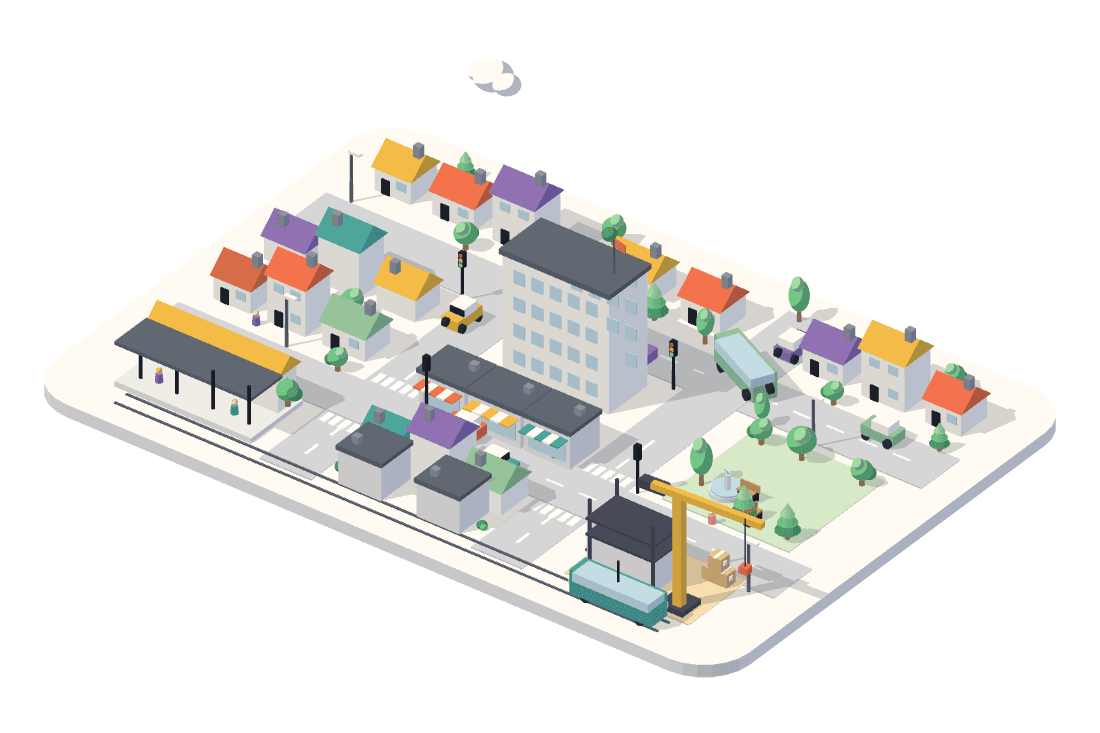
A small SVG town with streets, houses, a tram and a crane.

Diorama SVG

18 figures · 6 themes

Small, interactive illustrations for interfaces, docs and empty states. Crisp SVG, pointer reactions, no WebGL.

npx skills add educlopez/diorama --skill diorama -g
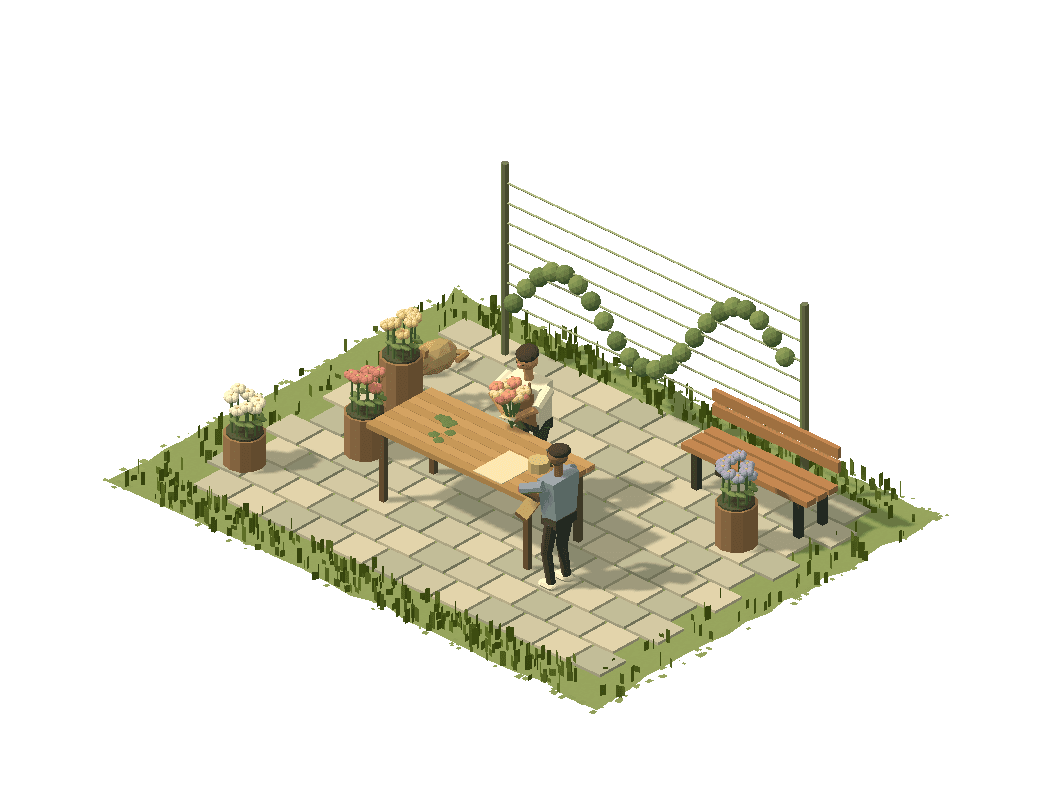
An adult florist works on a bouquet in a detailed miniature flower stall, with a waiting customer.

Diorama Worlds

4 scenes · 4 finishes

Little places with a story. Articulated people, textured ground and coordinated action. Three.js and WebGL 2.

npx skills add educlopez/diorama --skill diorama-worlds -g
A pixel-art pier on dithered water: someone fishes from the end, a rowboat rocks beside it, a thatched shed stands on the shore.

Diorama Pixel

3 scenes · no WebGL

Tiny places in dithered pixel art. Textured materials, one clear action. A small canvas renderer, no WebGL.

npx skills add educlopez/diorama --skill diorama-pixel -g
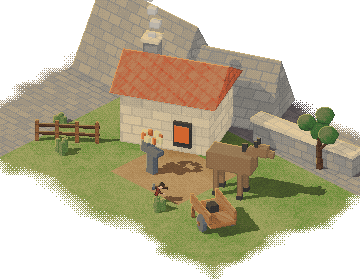
A dithered stone forge in a mountain yard: a smith at the anvil, smoke leaving the chimney, a mule waiting with a cart.

Diorama Dither

4 scenes · pixel kernel

Yards on the Pixel kernel, with a harder finish. A full frame, a hard shadow, one tap that toggles a state. No WebGL.

npx skills add educlopez/diorama --skill diorama-dither -g

Try an SVG figure.
It answers the pointer

The town is one example from the SVG skill: one file, no build step, and it answers the pointer. Worlds, Pixel and Dither are the other three skills, and each has its own page. The next section shows all four.

Fig 1 · Alder Springshero · toyHover a house, the tower, a car or the tram.rest
Alder SpringsSix blocks of houses, shops, a park and a tower; cars, a bus and a tram keep the streets busy and the crane turns.herotoy131 lines ↗
  1. Move the pointer. The camera tilts a few degrees toward it and settles back on a spring. Nothing is a video: every frame is drawn as you watch.
  2. Hover a part. What answers lifts, lights or turns. The read-out in the corner names it, and the list under the figure says what else answers.
  3. Switch the theme. The chips swap the whole look without reloading: toy, soft, mono, line, night and print. A figure carries one; a page may pass another.
  4. Pause it. The still frame is the pose the figure chose for reduced motion and thumbnails. Play again and the loop picks up where its clock is.

Made with Diorama.
Figures and stills

SVG, Worlds, Pixel and Dither are still posters: 18 figures, 4 Worlds, 3 Pixel and 4 Dither. Open a skill to watch every one move.

Describe the place.
Your agent builds the world

Every skill writes one HTML file. Your agent builds the scene, opens the real output in a browser and checks it before handing it over.

  1. Install the skill

    Choose SVG, Worlds, Pixel or Dither above. Each command installs the matching skill for Claude Code, Cursor or Codex; your agent follows its setup.

  2. Ask for a place

    “A harbour at dusk for our landing page”, “an empty state for the inbox”. The agent offers concepts, builds one, and looks at it.

  3. Drop in the file

    Serve the offline HTML, frame it, or mount the renderer in React. Embed SVG, Worlds, Pixel or Dither.

FAQs

Which skill should I choose?
Diorama SVG makes lightweight interactive illustrations for UI, docs and empty states. Diorama Worlds makes detailed 3D miniature stories with articulated people and four finishes. Diorama Pixel makes dithered pixel-art miniatures with no dependency. Diorama Dither uses the Pixel kernel for a yard that fills the frame, with a 4 by 4 ordered dither and a hard shadow. Same repository; separate install commands.
Is it free?
Yes. All four skills, their renderers and examples are MIT. Use them in personal or commercial projects. Your coding agent may have its own usage costs.
What do I need?
An agent that reads skills and Node.js 20+ for the build/check scripts. Browser checks need Chrome or Chromium. Worlds also installs its pinned build dependencies once and needs WebGL 2 in the viewer; Pixel and Dither each install one dev dependency for their browser checks. The install CLI may require a newer Node release; see each guide.
Does a finished file need a network connection?
No. SVG, Pixel and Dither include their small renderers; Worlds bundles Three.js and generated textures. SVG files are roughly 30–35 KB gzip, Pixel files about 55 KB uncompressed, Dither files at most 70 KB uncompressed, Worlds files about 0.77 MB uncompressed. These are different size measures, not a like-for-like benchmark.
Does it work in React?
Yes. Every renderer mounts into an element and releases its resources on cleanup. Use the corresponding guide: their APIs and dependencies are deliberately separate.
Can I change the look?
SVG has six tunable themes. Worlds has miniature, pixel, halftone and blueprint finishes sharing the same action and clock. Pixel takes its palette, ramps and textures from the scene. Dither keeps the Pixel kernel and sets its own frame, dither and hard shadow. All four honor reduced motion.